
AI Data Centres
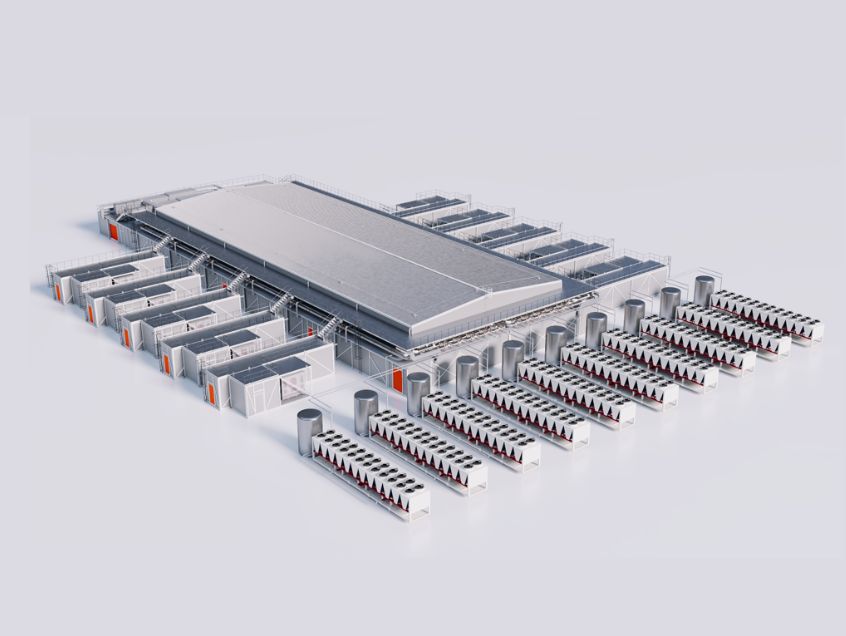
The data centre industry has its eyes set on prefabricated and modular infrastructure. Instead of traditional stick builds, more companies are moving into the world of prefabricated modules and on-site assembly. And it’s no surprise why.
The data centre industry is growing at an unprecedented rate. According to Goldman Sachs Research, data centre demand is set to grow by around 50% to 92 GW by 2027, with a compound annual growth rate of 17% between 2025 and 2028. In response to the extremely high demand for digital infrastructure, we now live in a world where, as a data centre developer, unless your project is due to be completed in the next two years and capable of delivering upwards of 100MW, you won’t be able to get your foot in the door with the likes of large hyperscalers including Amazon, Microsoft, and Google. With pressure mounting to scale and deliver at record speeds, it’s no wonder more companies are turning towards modular builds.
To understand modular data centres, it helps to look at how other industries have evolved. In early car manufacturing, vehicles were built largely by hand, with parts individually fitted. With the introduction of production lines by Henry Ford, cars began to be built in stages, reducing the average build time from over 12.5 hours to just 93 minutes, while also streamlining the labour force. By 1914, Ford’s 30,000 employees were producing around 300,000 cars, more than all of Ford’s competitors combined, despite them employing over 60,000 workers.
These gains in efficiency and speed come from manufacturing components in bulk through repeatable processes, then assembling them into a final product. This approach saves time, reduces errors, and improves consistency. The same principle is now being applied to data centres.
The easiest way to think about a modular data centre is like LEGO bricks. Each module is standardised, built, and tested off-site. When it arrives on-site, it doesn’t need to be constructed from scratch, it simply needs to be connected to all the other modules with power, cooling, and IT infrastructure being effectively “locked” together rather than built piece by piece.
One of the most well-known companies in the data centre industry for modular builds is Vertiv. They have developed a product known as Vertiv OneCore which is an end-to-end prefabricated data centre solution designed to meet the speed and flexibility demands of AI. Prefabricated building blocks, from power modules to cooling systems, are integrated and delivered as complete units, all housed within a steel data hall casing. Once on-site, these modules are assembled quickly, dramatically reducing build timelines.
Crucially, the prefabricated power modules contain all the critical power infrastructure, including uninterruptible power supply (UPS) systems. This is where modular design becomes even more impactful, as power resilience and scalability are embedded directly into the building blocks themselves.
Modular data centres represent a fundamental shift in how digital infrastructure is delivered. In an industry where speed, scale, and reliability are everything, the ability to manufacture, deliver, and assemble in parallel is a game changer.
As demand continues to surge, this approach will only become more critical. But while modular construction solves the challenge of speed, it also raises new questions, particularly around how key systems like power are designed within these modules.
In the next article, we’ll take a closer look at one of the most critical elements inside these building blocks: modular UPS systems, and how they are redefining resilience in the age of prefabricated data centres.