
Industry
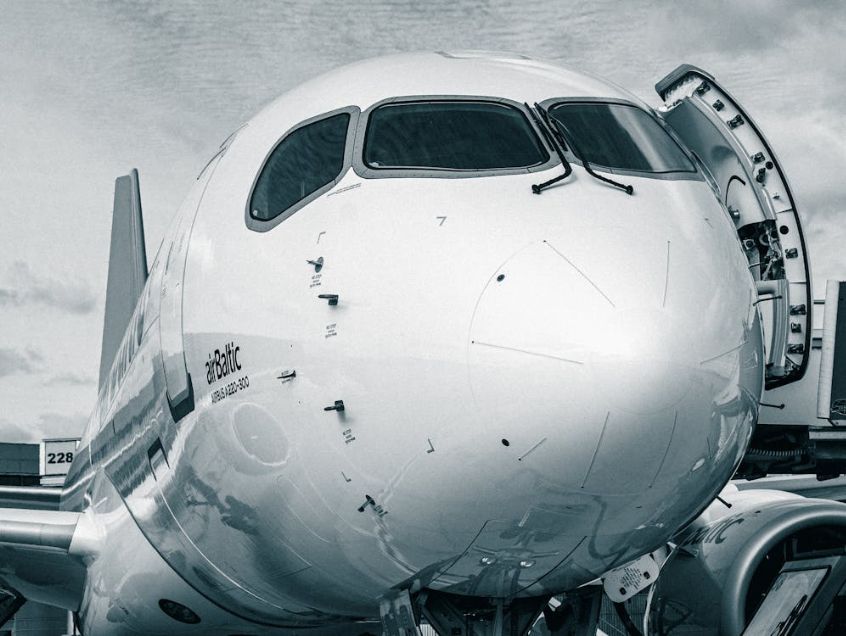
The aviation industry remains deeply tied to fossil fuels. Aviation accounted for roughly 2.5% of global CO₂ emissions in 2023, and the sector faces increasing pressure to reduce its environmental impact. While governments pursue ambitious decarbonisation goals, airlines remain in a competitive market where passengers demand cheap fares and rapid travel. There are a range of ways being explored to reduce aviation’s reliance on fossil fuels, including sustainable aviation fuels, hydrogen propulsion, and battery-electric aircraft, but each presents different technical and economic challenges. Among them, battery-electric aviation faces perhaps the largest hurdle of all: energy density.
Electric aircraft already operate today, though mostly in specialised roles rather than large commercial passenger flights. One of the most prominent examples is the Velis Electro, produced by Pipistrel. The two-seat aircraft, designed primarily for pilot training, became the first fully electric aircraft to receive type certification from the European Union Aviation Safety Agency in 2020. Electric propulsion offers several advantages in this environment. The aircraft is quieter than conventional trainers, produces no direct emissions during flight, and can be cheaper to operate on short repeated training flights.
Another example is the uncrewed Airbus Zephyr, a solar-battery powered aircraft capable of remaining airborne for months. The Zephyr can collect high-resolution imagery and operate as a communications relay, functioning in some ways like a low-orbit satellite. Solar panels recharge its batteries during daylight hours, allowing it to continue flying overnight using stored energy. These aircraft demonstrate the potential of electric propulsion but remain confined to specialised niches.
Jet fuel contains roughly 12,000 watt-hours per kilogram (Wh/kg), while most modern lithium-ion batteries deliver around 330 Wh/kg, and emerging solid-state batteries, known for their higher energy density, reach about 400 Wh/kg, but even that pales in comparison to traditional fuels. Weight compounds the problem. Aircraft must carry all of their energy onboard while counteracting gravity during takeoff, climb, cruise and also carrying the required ‘fuel’ reserves.
Put it this way, if a current-generation Boeing 737 were powered entirely by batteries, estimates suggest it would require roughly 35 tonnes of batteries, nearly double the empty weight of a 737-800 before fuel is added, and unlike road vehicles, aircraft can’t stop and recharge mid-journey. Conventional aircraft also become lighter as fuel burns during flight, improving efficiency, whereas battery-electric aircraft must carry the full weight of their batteries for the entire journey.
In 2024, NASA ran a study to see if an all-electric 150-passenger aircraft could actually work. The study concluded that a minimum battery energy density of roughly 1,330 Wh/kg would be required to operate a 150-passenger aircraft over 840 nautical miles. Current technologies fall well short of that target. Amprius Technologies, a company developing high-performance batteries for aviation and other demanding applications, reports cell energy densities of around 450 Wh/kg, roughly one-third of the required density. Battery energy density only improves slowly, about 5% per year on average, meaning it could take decades before the levels needed for large commercial aircraft are reached.
Aircraft need a massive amount of power, especially during takeoff and climb, when engines have to generate huge thrust in a short burst. But here’s the catch: batteries have to provide that same huge power while also storing enough energy to keep the plane cruising for hours. The result is batteries that perform reasonably across the board but do not excel at any one task.
On top of that, producing that kind of power generates a lot of heat inside the cells. Strong cooling systems are needed to prevent overheating and ensure reliable power throughout the flight. These systems also add weight and have to be fitted into a fuselage and wings that are already packed tight.
Battery-electric planes also have to meet really strict aviation safety rules. Authorities such as the Federal Aviation Administration (FAA) and the European Union Aviation Safety Agency (EASA) require propulsion systems to demonstrate thermal runaway containment, redundancy, fault tolerance and reliability. Battery aging is also a big issue because aircraft batteries have to perform well across thousands of flights, which most batteries today just aren’t built to do.
Insurance requirements also reflect the novelty of the technology. Lloyd’s of London has indicated it will not provide insurance quotes for commercial electric airlines until roughly 5,000 electric flight hours have been accumulated, a milestone the industry has not yet reached. Ivor van Dartel, CEO of Vaeridion, a company developing electric aircraft for short regional routes, has also noted that many electric aircraft projects face additional complexity because they do not fit neatly within existing certification frameworks.
Electric aviation is most likely to emerge first on short regional routes. Ivor van Dartel, CEO of Vaeridion, has highlighted the significant market for short-haul travel across Europe, North America, Asia and the Caribbean. Several aircraft currently under development target this segment. VÆRIDION is designing a nine-seat aircraft, the Vaeridion Microliner, with a range of roughly 400 km. Eviation Aircraft’s Eviation Alice offers similar passenger capacity and a range of around 460 km. Meanwhile, Heart Aerospace’s ES-30 is designed to carry 30 passengers, with an all-electric range of about 200 km. These ranges align with many existing routes such as London–Paris, New York–Washington, D.C., and Brussels–Amsterdam, which range from roughly 157 to 366 km.
Because fully electric aircraft face major technical constraints, many developers are exploring hybrid and alternative propulsion systems. The UK government’s Jet Zero Strategy, which targets net-zero aviation emissions by 2050, suggests electric aircraft could play a role on routes under 250 miles, while longer flights may rely on sustainable aviation fuels or hydrogen.
Hybrid aircraft combine electric propulsion with conventional engines. Batteries can assist during takeoff and climb, when engines require the most power, before switching to conventional propulsion during cruise. Hydrogen represents another potential pathway to green aviation. Airbus launched its ZEROe project in 2020 to explore hydrogen-powered aircraft, and in 2025 the company announced that fuel-cell propulsion had been selected as the preferred technology.
Aviation is under increasing pressure to cut its reliance on fossil fuels while still keeping air travel fast, affordable, and connected. Battery-electric aircraft offer an exciting glimpse of cleaner flight, especially on short regional routes. But right now, the industry is held back by the limits of current battery technology. For the time being, electric aviation will probably grow slowly, starting with training planes, specialised platforms, and short-haul commuter routes. Hybrid engines and hydrogen could help fill the gap as the sector looks for sustainable solutions.
In the end, the future of electric flight might have less to do with new aerodynamics or engines and more to do with one thing: better energy storage.