AI Data Centres

There’s a number that keeps coming up in conversations about AI infrastructure right now: 600kW. That’s the projected power draw of a single rack in NVIDIA’s next-generation Rubin Ultra architecture. A decade ago, a typical data-centre rack consumed just 5–10kW. So what does that jump mean for the power systems that have to support it?
NVIDIA doesn’t know how to take a break. Much like Apple and their iPhones, the company has settled into a relentless annual product cadence. First came Hopper, its GPU architecture for AI and high performance computing. Then came Blackwell, and now we’re talking about Rubin, a roadmap that pushes compute density and power requirements to ever more extreme levels. NVIDIA also knows how to put on a show. Its annual GTC conference has become the ‘Super Bowl’ of AI infrastructure, drawing developers, researchers, hyperscalers, and investors eager for a glimpse of what’s next.
At this year’s event, NVIDIA unveiled details of its Rubin roadmap, including Rubin Ultra, a system architecture designed to deliver unprecedented levels of AI performance. But alongside the headline-grabbing performance figures was another number that caught the attention of data centre operators: 600kW. That’s the projected power draw of a single rack in Rubin Ultra. A decade ago, these sorts of densities would have felt unthinkable. Because this innovation does not simply mean a bigger electricity bill. It represents a fundamental shift in how data centres are designed. As rack densities continue to climb, operators must rethink everything from power delivery and backup systems to cooling infrastructure and grid connections, all in an effort to prevent their data centres from becoming redundant by the time they’re ready for service.
Data centres are essentially large refrigerators, and that’s because they have one main function, to keep the digital infrastructure cool. Almost all the electricity a chip consumes eventually becomes heat, and for most of computing history, the answer to cooling was air: move enough of it, fast enough, and you can keep chips at a safe temperature.
With power densities of around 5 to 10kW per rack, air cooling was sufficient for most facilities. But with rack densities increasing at an insane pace, traditional air cooling is now inefficient. The liquid cooling industry has spent years positioning itself as the future, and that future has arrived faster than almost anyone predicted.
One of the most popular approaches is direct-to-chip cooling which involves circulating coolant through cold plates attached directly to processors. Direct-to-chip cooling can achieve efficiency levels up to 1,000 times greater than traditional air-cooling methods. By cooling components directly at the chip level, heat is transferred much more effectively than when relying on chilled air circulated through server racks. As a result of the increased efficiency, direct-to-chip cooling also uses up to 30% less energy.
Cooling is only part of the challenge. The other is scale. Higher rack densities don’t just change what happens inside the building. They change the size of the building itself. A data centre designed around 10kW racks looks nothing like one built for 100kW racks. Where facilities of 10 to 15 megawatts were once considered large, hyperscalers in the US are now planning at gigawatt scale. That is not a modest step up. It is a different category of infrastructure entirely, with fundamentally different demands on the grid that feeds it.
And the grid is struggling to keep up. Up to 50% of global data centre projects are currently facing delays due to power limitations and grid equipment shortages with US interconnection queues delaying projects for years and utility providers warning of regional capacity shortages. Power transformer lead times, once 6 to 8 months, are now stretching to 3 to 4 years.
Power is no longer just an operational input. It is a strategic constraint. How operators secure, manage, and protect energy will increasingly define their ability to scale AI workloads. That means locking in grid connections earlier, engaging utilities at the pre-construction phase, and planning for rack densities that may be two or three generations ahead of what’s being deployed today. A facility designed for 40kW racks and built on today’s timelines could be operationally obsolete before it opens.
Modular and prefabricated delivery methods are more popular than ever, with highly modularised projects achieving schedule reductions of 30 to 50% compared to conventional builds. But prefabricated modular infrastructure offers more than a construction shortcut, for existing facilities facing the density challenge, it offers a practical retrofit path.
More than 60% of existing data centres across Ireland, the UK, and mainland Europe were built before 2015 under different expectations for energy intensity and cooling. Many of these facilities cannot support modern resilience requirements without fundamental reengineering. Prefab won’t solve every constraint, but for operators caught between ageing infrastructure and accelerating demand, it is often the fastest route to higher density.
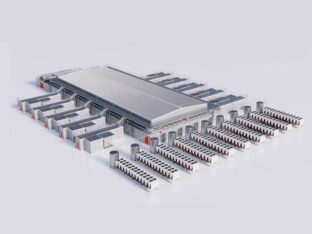
Some operators are pulling their power infrastructure out of their current data centre and placing it in a module outside the building, freeing up white space for higher-density racks. Others are adding modular power units that can be dropped right outside the building and tied into existing architecture. It is a way of upgrading power capacity without tearing down and starting again.
What NVIDIA’s roadmap makes clear is that the data centre industry is no longer setting its own pace. The chips are. Each new generation arrives with higher densities, greater power demands, and less tolerance for infrastructure that wasn’t designed with it in mind. Operators who plan for today’s rack densities risk being stranded by tomorrow’s. The companies that will define the next era of AI infrastructure are the ones treating power, cooling, and grid access not as utilities to be arranged, but as strategic assets to be secured well in advance.