AI Data Centres
The world has entered an AI arms race. Nations are pouring billions into data centres, chip manufacturing, and grid expansion to power the next wave of intelligence. But while they scramble to build the most sophisticated models, they also need to meet AI’s unpredictable energy demands. Because without grid stability, even the smartest models fall short.
Remember the first viral AI videos of Will Smith eating spaghetti? Now compare them to the Sora clips flooding your social media feeds and you’ll get a sense of just how much the technology has evolved. ChatGPT, Claude, and Gemini have moved from tech experiments to household names, reshaping how we work, create, and think. Beyond the novelty, AI promises enormous societal benefits. For national security, AI is proving indispensable in countering rising cybersecurity threats, dismantling global trafficking networks, and protecting online spaces. In medicine, it could revolutionise drug discovery, such as by identifying new antibiotics to fight infections that currently have no cure. Economically, the stakes are staggering. The UN Trade and Development Agency projects that the global AI market will surge from $189 billion in 2023 to $4.8 trillion by 2033.
The Organisation for Economic Co-operation and Development estimates that AI could increase UK productivity by as much as 1.3 percentage points every year which is worth the equivalent of £140 billion. In the US this year alone, AI investments by companies now account for 40% of GDP growth. So, while AI demands enormous resources, vast amounts of energy, and carries genuine risks, the cost of sitting on the sidelines is far greater. Nations that hesitate risk falling behind, forfeiting not only economic opportunity but also their security and sovereignty in an increasingly AI-powered world.
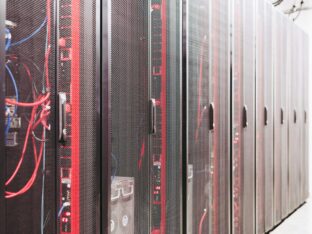
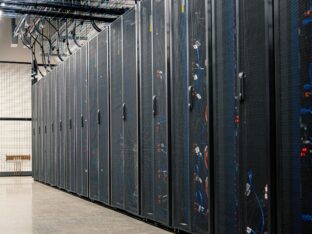
Some data centres are built to power cloud services such as storage, hosting, and enterprise software, while others now focus almost entirely on training and deploying AI models. By 2030, around 70% of global data centre capacity is expected to be dedicated to advanced AI workloads. These AI data centres are far more power-hungry than conventional ones, with a single facility capable of consuming as much electricity as 100,000 households. Yet it’s not just the amount of energy they draw that poses a challenge, but how they use it. Traditional data centres typically run on steady, predictable loads, while AI data centres experience sharp spikes and sudden drops linked to two main stages of computation: training, where models learn from vast datasets, and inference, where those trained models apply what they’ve learned to make predictions or decisions in real time. These alternating cycles of intense computation and lighter workloads create unpredictable energy patterns, which can threaten grid stability.
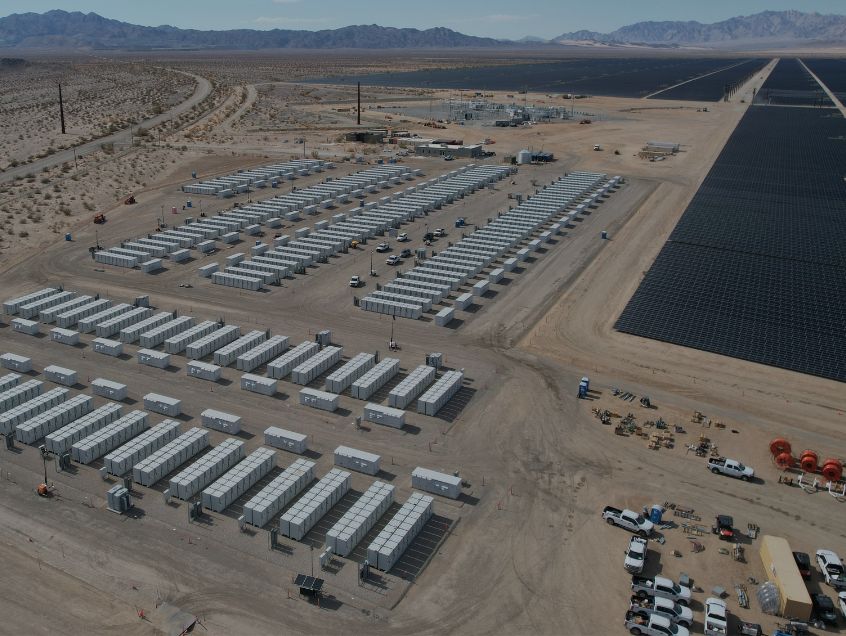
To meet AI’s soaring energy demand, energy storage solutions play an essential role. From pumped hydro and thermal storage to newer concepts like liquid air, engineers are finding inventive ways to capture surplus electricity and release it when the grid needs support.
What sets battery energy storage systems (BESS) apart is their speed and efficiency. In most other storage methods, energy must first be converted back into electricity before it can be used. For example, in hydro storage, water held at height is released to drive turbines, turning potential energy into kinetic energy and then into electricity again. That process takes time and loses efficiency along the way. Batteries discharge electricity directly, providing an almost instant response. Companies like Nyobolt are taking this further, developing dynamic response systems that react within microseconds to stabilise high-power AI workloads.
Investors are betting big on BESS technology. Nvidia recently backed Redwood Materials, a battery recycling firm founded by former Tesla CTO JB Straubel, with a $350 million Series E investment to repurpose electric vehicle batteries for large-scale, low-cost storage. Together, these advances are redefining how energy is stored, balanced, and delivered in the age of AI.
The future of AI will depend as much on electrons as algorithms. Batteries capable of reacting in milliseconds and grids resilient enough to handle unpredictable surges will separate those who can harness AI’s full potential from those left struggling to keep the lights on. The true race is not just to build intelligence, but to power it sustainably and reliably.