
Robotics & Physical AI
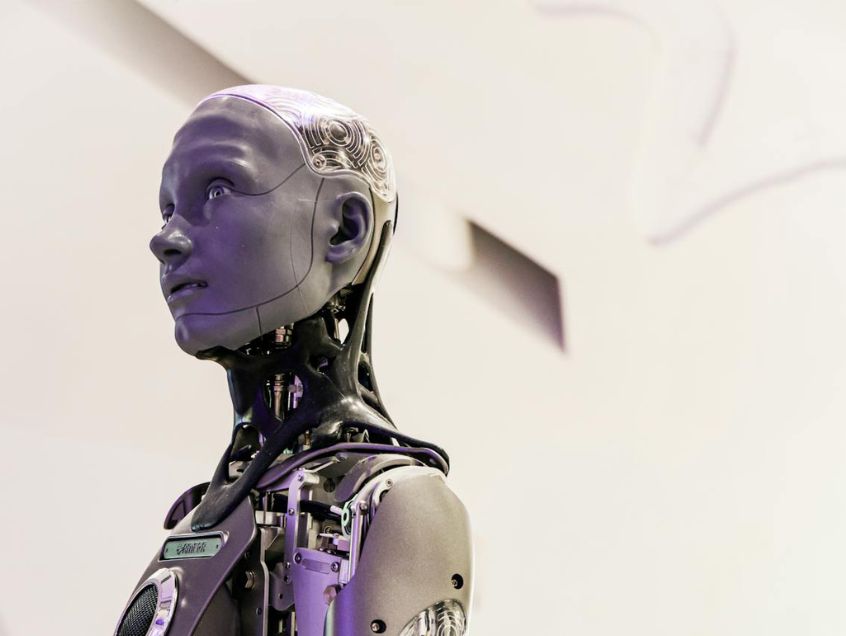
In part one, we explored the rise of humanoid robots and their growing popularity, but also why, for now, they still can’t match human capabilities. In this article, we’ll dive deeper into their current limitations and examine the potential solutions on the horizon.
Raw battery capacity isn’t necessarily the biggest energy challenge for humanoid robots. Modern electric vehicles show that large, high-capacity battery packs are technically feasible; some long-range EVs carry more than 100 kWh of usable energy. For humanoids, however, the real challenge is carrying that weight, which is why energy density is so crucial.
To understand the engineering challenge facing humanoid robotics, it is useful to examine the human energy benchmark. A typical adult consumes between 2,000 and 3,000 calories per day, depending on factors such as height, gender, and activity levels. Converted into electrical terms, a daily intake of around 2,500 kcal equates to roughly 2.9 kWh of energy. In terms of power output, the human body operates with surprising efficiency. A person at rest produces roughly 100 watts of power, while moderate activity can increase this to around 200–400 watts. Elite athletes can produce far higher bursts of power. Professional cyclist André Greipel, for example, has sustained around 1,000 watts for roughly 30 seconds and recorded peak outputs approaching 1,900 watts during a sprint. In other words, a human labourer performing a full day of activity is effectively powered by roughly 3 kWh of energy.
Unlike many industrial machines, humanoid robots must move freely through complex environments and therefore carry their energy source onboard. Current lithium-ion batteries have an energy density of roughly 250 Wh/kg, meaning a theoretical 5 kWh battery pack would weigh roughly 20kg. Anyone who’s carried a full hiking rucksack or worn body armour will tell you that 20kg will almost certainly have an effect on your mobility and make you tire more quickly. Things are no different for humanoid robots: heavier battery packs reduce balance and speed and accelerate energy depletion. Smaller packs make movement easier and more efficient, but then you need to recharge or swap batteries more often.
The gulf between biological and battery-based energy storage is most striking when comparing the raw energy density of fat to lithium-ion batteries. 1 kilogram of biological fat holds nearly 40 times more energy than 1 kilogram of a high-end lithium-ion battery. This highlights the enormous energy-density gap that battery technology has yet to close. If a humanoid robot could store energy with the density of biological fat, a power supply with the same capacity as a Long Range Tesla Model 3 (about 80 kWh) would weigh less than 9 kg. In reality, a Tesla’s battery pack weighs nearly 500 kg to achieve that same storage.
Replicating human capabilities in a humanoid robot is considerably complex. Robots must draw power not only for locomotion, but also for onboard computing, sensors, balance systems, and control electronics. As a result, a humanoid performing physically demanding tasks throughout the day may require up to 16 kWh for a full working period, or alternatively require charging every two to three hours if equipped with a smaller battery pack. Even then, matching the efficiency of the human body remains difficult.
Battery capacity and density are only part of the challenge. Humanoid robots operating in industrial environments must also deliver high bursts of instantaneous power. Tasks such as lifting objects, recovering from a fall, or executing rapid movements require short periods of very high output. Batteries must therefore support high discharge rates capable of producing power comparable to elite human performance. The necessity for both continuous usage and high power output add complexity for battery engineers.
Thermal management adds another layer of complexity. Electric vehicles and stationary industrial systems can accommodate large cooling systems to manage heat from batteries, motors, and electronics. Humanoid robots, by contrast, must integrate these systems within a compact, human-shaped body. This constraint introduces further design compromises. Battery packs may need to deviate from standardised shapes to fit within a humanoid form, complicating manufacturing and cooling. Air cooling systems may struggle in industrial environments where dust and particulates accumulate, increasing maintenance requirements and reducing efficiency. Liquid cooling systems can improve performance but introduce additional weight and system complexity, forcing trade-offs elsewhere in the design.
Cycle life is another critical factor. Batteries used in humanoid robots are likely to be charged and discharged daily over extended periods, requiring them to withstand thousands of cycles without significant degradation. Frequent high-power discharge events generate heat and mechanical stress within battery cells, accelerating wear.
Some of these constraints may be mitigated through changes in how humanoid robots are operated.
Fast‑charging infrastructure could allow robots to top up their batteries during short, scheduled breaks, reducing the likelihood of deep discharge cycles that accelerate degradation. Battery swapping systems may offer another solution. Chinese robotics company UBTech has demonstrated a humanoid robot capable of autonomously replacing its battery pack at a docking station, similar to systems already used by many warehouse Autonomous Mobile Robots (AMRs).
For tasks requiring particularly high power output, designers may also consider tethered workstations. In these scenarios, a humanoid robot could connect directly to a mains power supply while performing heavy-duty tasks such as lifting or rapid repetitive movement.
Advances in battery technology could help humanoids catch up. Industry research, including analysis from TrendForce, suggests emerging technologies such as solid-state batteries could address many of the constraints facing humanoid robots. By replacing the liquid electrolyte used in conventional lithium-ion cells with a solid material, these designs promise higher energy density, improved safety, and longer cycle life. Companies like Nyobolt, a UK-based battery technology firm, are developing cutting-edge batteries for humanoid robots, with fast-charging solutions that can fully charge in 10–50 seconds, deliver ten times the cycle life of conventional lithium-ion batteries, and provide 6x the energy density of ultracapacitors.
At present, however, a disconnect remains between battery manufacturers and humanoid designers. Battery producers favour mass-produced, standardised formats, while humanoid developers require bespoke, form-fitted solutions. This mismatch drives up costs, limits scalability, and slows the emergence of a standardised approach to humanoid energy systems.
If such technologies reach commercial maturity and standardisation begins to emerge, the breakthrough enabling widespread humanoid robotics will likely come not from artificial intelligence alone, but from advances in energy storage and power management.