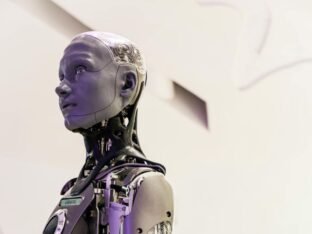
Robotics & Physical AI

Aside from a few notable exceptions, there is now broad consensus that electric vehicles are the future of the automotive industry. Against that backdrop, it is important to note that Elon Musk has started pivoting Tesla’s focus toward humanoid robotics, reportedly reallocating portions of Tesla’s manufacturing capacity toward the production of these machines. This shift signals a broader belief within parts of the technology sector: robotics may represent the next major industrial frontier.
But Tesla isn’t the only company exploring the humanoid robotics market. BMW has begun piloting the AEON humanoid robot, produced by Hexagon Robotics, at its Leipzig plant, where it is being used across various production areas such as battery manufacturing and exterior component production. BMW has stated that many of the tasks assigned to these robots are monotonous, ergonomically demanding, or safety-critical, making them suitable early use cases for humanoid systems.
A recent report from Barclays suggests the sector could grow into a $200 billion market by 2035. That growth could also reshape the battery industry, with analysis indicating that demand for solid-state batteries, known for their higher energy density and improved safety, driven by humanoid robots could reach 74 GWh by 2035, more than 1,000 times higher than projected demand in 2026.
Much of the public conversation around humanoid robots focuses on advances in artificial intelligence. Yet there is a more fundamental constraint that may determine whether these machines can work alongside humans at scale: energy.
Many factories and warehouses currently use a mix of fixed automation, robotic arms, and autonomous mobile robots (AMRs). Despite these innovations, factory environments are still largely built around human labour, from desktop control systems and safety features to stairs and ladders. Even most power tools remain handheld, with triggers, switches, and buttons designed specifically for human fingers.
Humans, while they can and often are specialists, are also highly flexible and adaptable. A worker can move between tasks with relatively little friction, often requiring only a manual, a short period of observation, and some practice to become competent. The combination of motor skills, intuition, and learning that many people take for granted, is what makes human labour so effective across a wide range of roles.
Rather than redesigning factories and warehouses around fully autonomous systems, humanoid robots offer an alternative approach: adapting the machine to the environment. In doing so, they promise to bridge the gap between highly specialised automation and general-purpose human labour. Humanoids are not being designed because they are optimal, but because they fit into a world already optimised for humans.
Energy is the central constraint upon which the further development and deployment of humanoid robotics depends. Unlike many industrial systems, humanoid robots must carry their energy source onboard within a tightly constrained, human-like form factor, while relying on locomotion systems that lack the efficiency of biological movement refined over hundreds of thousands of years.
This creates a series of interconnected trade-offs… something of a catch-22. Improving locomotion, balance, or sensory capability requires additional energy, which in turn demands greater onboard storage. Yet increasing energy storage typically adds weight to the system, placing further strain on movement and stability.
Owing to these constraints, current humanoid robots have limited runtime compared to a full human shift. Many systems require frequent charging, battery replacement, or connection to external power sources for certain tasks, creating a clear disadvantage in continuous industrial environments.
If a production line needs to operate without interruption, frequent downtime for charging or battery swaps becomes a significant limitation. Humans, by contrast, refuel themselves with relative ease, can adapt to different tasks without requiring software updates or hardware modifications, and are capable of sustained operation throughout the working day with minimal interruption.
The gap is therefore not only one of capability, but of endurance.
The primary barrier facing humanoid robots is not artificial intelligence, but energy. It is the constraint that underpins the trade-offs between runtime, strength, mobility, and reliability.
If companies, and perhaps even households, are to adopt humanoids at scale, the challenge is not simply to make them smarter, but to power them effectively for sustained, real-world use. The question is not whether machines can replicate human movement or decision-making, but whether they can do so for long enough to be useful.
In the next article, we will examine the energy challenge more closely, exploring why batteries remain the limiting factor in humanoid robotics and how emerging technologies could reshape the equation. From energy density and power delivery to new battery chemistries on the horizon, the energy systems that power humanoids remain a work in progress.