
Robotics & Physical AI
When the Iran war erupted earlier this year, energy markets quickly felt the impact. The Middle East sits at the centre of global oil and gas supply chains, and disruptions linked to the conflict have tightened energy markets and pushed fuel prices higher across Europe.
Although Britain is geographically far from the region, it is still exposed to global energy shocks. Oil and gas are traded internationally, meaning supply disruptions anywhere in the world can ripple through markets everywhere. As tensions have escalated and shipping routes in the Gulf have come under pressure, wholesale energy prices have risen, feeding through to European fuel costs and electricity markets.
For British households, the energy price cap (which sets the maximum price suppliers can charge customers on default tariffs) was determined before the latest escalation began. While the cap introduced in April 2026 lowered bills slightly, British Gas predicts the next adjustment in July to increase by roughly 9% as wholesale energy costs respond to the crisis.
Britain’s energy system today looks very different from just a decade ago. According to NESO, in 2025, renewable sources including wind, solar, hydro and biomass produced a record 44% of Britain’s electricity, generating more than 127 terawatt hours of power. That represents a threefold increase compared with 2015. Solar energy has been one of the fastest-growing contributors. Thanks to expanding installations (and the sun deciding to finally favour Britain) the Met Office confirmed 2025 was the sunniest year on record in the UK.
This growing renewable capacity is not just about reducing emissions. It also strengthens energy security by reducing the amount of imported fossil fuel needed to keep the lights on. In fact, the benefits are already visible during the current crisis.
According to analysis by Carbon Brief, renewable generation has helped the UK avoid importing around £1.7 billion worth of gas since the war began. Together, this year, wind and solar have generated 21 terawatt hours of electricity since late February, significantly reducing the need for gas-fired power stations. As a result, gas generation has fallen to some of the lowest levels on record for early spring. In simple terms, every megawatt-hour produced by wind turbines or solar panels is energy that does not need to be generated using imported gas.
But while large-scale renewables are helping stabilise the national system, many households are also starting to look for ways to reduce their exposure to energy price volatility.
At the consumer level, the shift toward electrification is already visible. Across Europe, sales of battery electric vehicles are rising rapidly as fuel prices climb. In March, registrations of battery electric cars across the EU increased by nearly 49% compared with the same month last year, giving electric vehicles more than 20% of the market. For many drivers, the appeal is simple: electricity prices may fluctuate, but they are generally less exposed to geopolitical supply disruptions than petrol and diesel. Yet transport is only one piece of the puzzle.
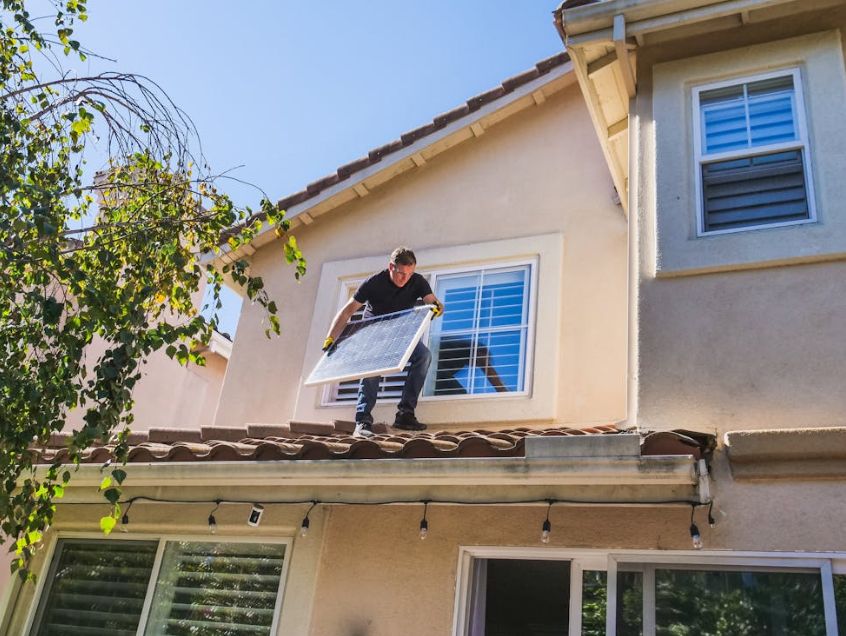
Households are also beginning to rethink how they generate and store electricity. The UK government is now accelerating the rollout of plug-in solar panels designed for balconies, gardens or small rooftops. These smaller systems could soon be available in retail stores, think the middle of Lidl, offering households a low-cost way to generate their own electricity and reduce bills. At the same time, falling battery costs are making home energy storage increasingly attractive.
According to Octopus Energy, battery prices have fallen by roughly 90% since 2010, dramatically improving the economics of storing electricity at home. This means more households are looking into installing home batteries to charge when electricity is cheap, or when their solar panels are generating power, and use it later when prices are higher. For families facing rising energy costs, this technology offers a new level of flexibility and independence.
Communities are also exploring ways to store locally generated renewable energy. In Oxfordshire, the community-owned Ray Valley Solar project already generates enough electricity to power around 7,000 homes each year. Now the project is planning to install a large battery funded partly through community investment.
The idea is simple: on sunny days the solar park often generates more electricity than the local grid can absorb. By adding battery storage, that surplus energy can be stored during the day and released later when demand increases in the evening. The project could become the UK’s first community-owned battery connected to a renewable energy site.
The Iran war has once again demonstrated how interconnected global energy markets remain. Events thousands of miles away can still influence the price households pay for fuel and electricity.
But it has also revealed how rapidly the energy system is changing.
Large-scale renewables are already reducing Britain’s reliance on imported gas. Meanwhile, electric vehicles, rooftop solar panels and home batteries are giving households new ways to manage their own energy use.
None of these solutions will eliminate global energy shocks overnight. But together they point to a broader shift: an energy system that is cleaner, more localised and less vulnerable to geopolitical disruption.
And in an uncertain world, that resilience may prove just as valuable as the electricity itself.