Robotics & Physical AI

One country seems to be firmly at the top of everyone’s travel bucket list: Japan. With world-class cuisine, a hugely influential video game and pop culture scene, and one of the largest cities in the world in Tokyo, it’s easy to see why. One moment you’re eating fresh sushi in a centuries-old market, and the next you’re riding a bullet train across the country before spending the evening in a neon-lit entertainment district.
But beneath the appeal, Japan is facing a demographic crisis that has been building for decades: a persistently low birth rate. In 2024, the fertility rate fell to a record-low of 1.15, well below the replacement rate of 2.1 children per woman needed to keep the population stable. In simple terms, fewer people are being born than are dying, leading to population decline.
There are several reasons behind this trend. First, delayed marriage and childbearing, as many people prioritise education and careers into their 30s. Second, high living costs, especially in cities like Tokyo, where housing and childcare can be expensive. Third, long working hours and demanding job culture, which leaves less time and energy for family life. Together, these factors have steadily pushed birth rates downward over time.
The consequences are already becoming visible. Japan has a rapidly ageing population, with a growing proportion of citizens over 65 and a workforce not big enough to support them. Rural areas are especially affected, with shrinking towns, school closures, and abandoned housing becoming more common. At the same time, pressure is mounting on pension and healthcare systems as fewer workers are available to fund and care for an increasingly elderly population.
Well, one option often raised is immigration. But if you’ve been to Japan, you’ll know how strongly it values cultural continuity, social cohesion, and a relatively homogenous national identity. Because of that, large-scale immigration has historically been approached cautiously, with concerns ranging from integration challenges to fears of cultural dilution and social friction.
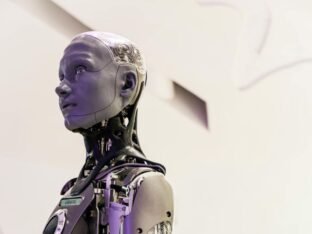
Instead, attention is increasingly shifting toward a different kind of solution: automation and humanoid robotics. Rather than replacing people through migration, the idea is to offset labour shortages with machines that can operate in human environments, supporting industries where the workforce is shrinking fastest.
Japan Airlines has begun testing humanoid robots for ground handling work at Tokyo’s Haneda Airport, making headlines around the world. In a two-year trial designed to ease pressure on staff, Chinese-made robots are being introduced to handle physically demanding tasks such as loading and unloading cargo containers.
China is also advancing rapidly in humanoid robotics. Another headline you may have seen is the world-record-breaking half-marathon completed in 50 min 26 sec by a humanoid robot dubbed ‘Lightning’, produced by Honor, a Chinese smartphone maker. There are now over 140 Chinese companies actively involved in the humanoid robotics sector, and that’s partly due to the scale of resources the country is pouring into the sector. In 2025, China announced a £100bn fund aimed at accelerating strategic technologies, including robotics, quantum computing, and clean energy.
But there’s one big problem: Power
With rapid advances in artificial intelligence, one of the biggest limiting factors in humanoid robot development is no longer intelligence but power. Energy constraints ultimately determine the trade-offs between runtime, strength, mobility, and reliability. Luckily, the battery industry is making breakthroughs that are alleviating some of this. Chinese robotics company UBTech has demonstrated a humanoid robot capable of autonomously replacing its battery pack at a docking station, similar to systems already used by many warehouse autonomous mobile robots (AMRs). In addition to this, there are also advances in battery technology itself with companies like Nyobolt developing cutting-edge batteries for humanoid robots, with fast-charging solutions that can fully charge in 10–50 seconds, deliver ten times the cycle life of conventional lithium-ion batteries, and provide 6x the energy density of ultracapacitors.
Population decline isn’t unique to Japan. A recent report shows that last year Germany recorded its lowest fertility rate since postwar records began in 1946, with births falling to around 1.35 children per woman. The United Kingdom is not far behind, with a fertility rate of roughly 1.41. Across much of the developed world, populations are ageing, workforces are shrinking, and governments are grappling with the same fundamental question: who, or what, will do the work in the decades ahead?
In that sense, Japan may simply be the first country forced to confront a problem that many others will soon face. Whether through robotics, policy reforms that support families, increased immigration, or some combination of these approaches, societies will need to rethink how economies function when population growth can no longer be taken for granted.
Humanoid robots alone will not solve the demographic crisis. However, as labour shortages deepen and technology advances, they may become an increasingly important part of the solution by filling gaps where there are simply not enough people. If that future arrives, Japan will not only remain a fascinating travel destination and a global hub of culture and technology. It may also offer the world its first real glimpse of what a post-growth, robot-assisted society could look like.